- Last week as CES got under way, a slew of companies announced integration plans with Nest, the Google-owned company better known for its smart thermostat.
- One of those companies is Automatic, the maker of a small adapter that scores your driving habits in an effort to help you save gas, and drive safer. Technically Automatic and Nest already played nicely with one another, but it required an additional service to do the legwork. By eliminating a middle man, the two devices can now talk directly to one another.
- If you’re a gas transmission professional, graduate engineering student, technician, or field worker—or if you work with the transmission industry in any capacity—you’ll find courses to meet your needs. Some courses can be combined to earn certification. For details and registration options, click on each course title.
- Onsite option. Any course can be brought to your facility or nearby, and we can customize courses and course modules.
- There is an intense collaboration between the EUT / WT with the IWW Water Centre in Mülheim an der Ruhr, associated institute at the University of Duisburg-Essen.
- Special international recognition has the EUT / WT obtained in the field of membrane technology. This is, for example, the retention of dissolved organic and inorganic substances in water and colloidal and finely dispersed water contents, the combination of powdered activated carbon and membrane filtration, control of membrane integrity, membrane life and fouling effects, treatment costs and the study and modeling of the functioning of membranes (eg retention in nanofiltration, particle deposition in ultrafiltration, combined flocculation / ultrafiltration). New additions include work in which it is to optimize plant operation using neural networks.
- In the field of swimming pool water treatment membrane systems were first used and further examination of the processes in activated carbon filters were performed.
- The field of fixed bed adsorption processes and focuses on the modeling of the processes in activated carbon filters, the development of novel fixed bed adsorber with beds of so-called permeable synthetic panels (PSC) in combination with powdered activated carbon and the combination of membrane processes and powdered activated carbon. There were also carried out studies on the handling large adsorption of drugs to activated carbon.
- There's also the behavior of drug residues and Endocrine in water treatment as a cross-cutting issue in focus.


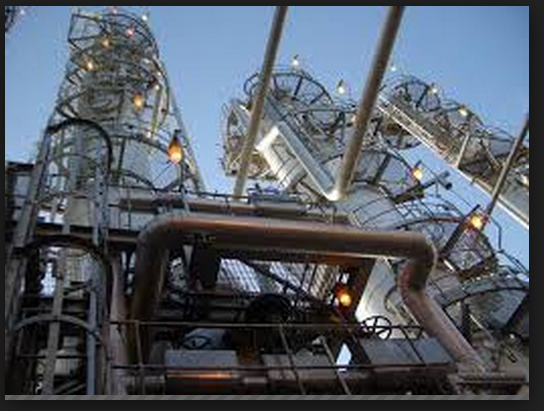
- The Bolashak oil and gas processing plant, located 40km north-west of Atyrau in Kazakhstan, was launched in June 2013. The onshore processing plant, built as part of Kashagan project, will process oil and gas from the offshore Kashagan oil field in the North Caspian Sea.
- The plant has the design capacity to process up to 450,000 barrels of oil and 8.8 million cubic metres of gas per day. The first oil production at the plant is expected by the end of 2013. The launch of the new processing plant is believed to have created more than 2,500 jobs.
- The Kashagan field, located 80km south-east of Atyrau in the North Caspian Sea, is estimated to hold 35 billion barrels of oil. The field is being developed as part of the North Caspian Sea Production Sharing Agreement (NCSPSA) signed in 1997.


- The NCSPSA consortium, comprised of seven partners, is responsible for the appraisal and development of 11 offshore blocks in the North Caspian Sea, which include the Kashagan, Kalamkas, Aktote and Kairan fields.
- The operator under NCSPSA is the North Caspian Operating Company (NCOC). The equity interests of the seven consortium partners in the operating company are 16.1% each for KMG (KazMunayGas), Eni, ExxonMobil, Shell and Total, 8.40% for ConocoPhillips and 7.56% for INPEX.
- If anyone had devised a way to create a genetically engineered baby, I figured George Church would know about it.
- At his labyrinthine laboratory on the Harvard Medical School campus, you can find researchers giving E. Coli a novel genetic code never seen in nature. Around another bend, others are carrying out a plan to use DNA engineering to resurrect the woolly mammoth. His lab, Church likes to say, is the center of a new technological genesis—one in which man rebuilds creation to suit himself.
- When I visited the lab last June, Church proposed that I speak to a young postdoctoral scientist named Luhan Yang, a Harvard recruit from Beijing who’d been a key player in developing a new, powerful technology for editing DNA, called CRISPR-Cas9. With Church, Yang had founded a small company to engineer the genomes of pigs and cattle, sliding in beneficial genes and editing away bad ones.
- As I listened to Yang, I waited for a chance to ask my real questions: Can any of this be done to human beings? Can we improve the human gene pool? The position of much of mainstream science has been that such meddling would be unsafe, irresponsible, and even impossible. But Yang didn’t hesitate. Yes, of course, she said. In fact, the Harvard laboratory had a project to determine how it could be achieved. She flipped open her laptop to a PowerPoint slide titled “Germline Editing Meeting.”
- Here it was: a technical proposal to alter human heredity.


- “Germ line” is biologists’ jargon for the egg and sperm, which combine to form an embryo. By editing the DNA of these cells or the embryo itself, it could be possible to correct disease genes and to pass those genetic fixes on to future generations. Such a technology could be used to rid families of scourges like cystic fibrosis. It might also be possible to install genes that offer lifelong protection against infection, Alzheimer’s, and, Yang told me, maybe the effects of aging. These would be history-making medical advances that could be as important to this century as vaccines were to the last.
- The fear is that germ-line engineering is a path toward a dystopia of superpeople and designer babies for those who can afford it.
- The best way to describe the unrelenting pace of technology growth is by using Gordon Moore’s words:
- “the number of transistors per cm2 doubles about every 18 months”.
- What does it mean? It means that the processing power is hastily increasing, technology gets obsolete quicker than before, customers’ expectations towards it become higher and higher and – potentially – technological deployment will have no end.
- From a businessman’s point of view, this fact has consequences: it is impossible for managers – but also for front-line employees – to know anything about technology, since it is a daily reality for everyone.
- Moreover, technological firms tend to converge and inglobate other industries, not necessarily related to technology. In a hypotetical future, we could have an enormous firm controlling almost everything, from the Internet to energy, gas and whatever. Just think about Google, the most famous computer software and web search engine company has been acquiring, on average, more than one company per week since 2010 – if you want to have a look at Google’s acquisitions, just